
Tokyo’s Best Independent Gyudon Shops: 3 Classic Beef Bowl Stops Beyond the Chains

Updated: Aug 29
For many visitors, gyudon is one of the first Japanese dishes they encounter. Affordable, fast, and deeply satisfying, this humble beef bowl has become a staple of everyday life in Japan. Walk through almost any neighborhood in Tokyo, and you’ll find a branch of Yoshinoya, Sukiya, or Matsuya serving gyudon around the clock.

But while the major chains have made gyudon famous, they have also come to dominate the landscape. Independent gyudon shops are becoming increasingly rare, especially in central Tokyo. For travelers looking to experience the dish in a more traditional setting, seeking out these surviving local establishments offers a glimpse into an older side of the city’s food culture.
Before visiting three of my favorite independent gyudon shops, it’s worth understanding what gyudon is and how it became one of Japan’s most beloved comfort foods.
What Is Gyudon?
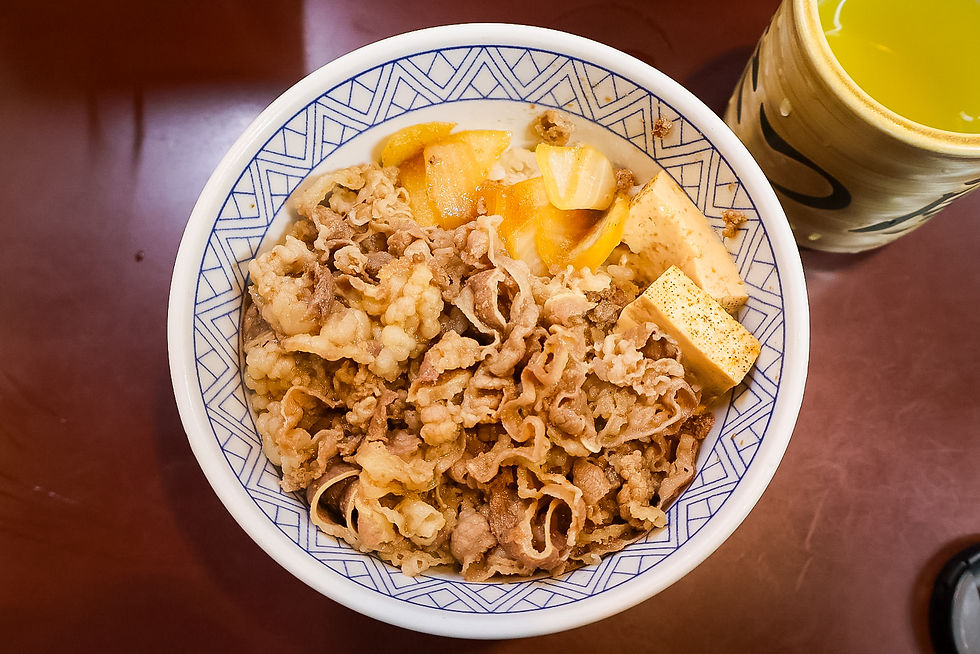
Gyudon (牛丼) literally means “beef bowl.” The dish consists of thinly sliced beef and onions simmered in a sweet-savory broth made from soy sauce, mirin, sake, and dashi, then served over a bowl of steamed rice.

The appeal is its simplicity. The beef absorbs the rich seasoning while the onions soften and become slightly sweet. Together with freshly cooked rice, the result is a meal that is both filling and comforting without being heavy.
Many diners customize their bowls with toppings such as a raw egg, soft-boiled egg, pickled ginger, or extra onions. The dish is quick enough for a rushed lunch but satisfying enough to stand on its own as a complete meal.
The History of Gyudon:
Gyudon’s origins can be traced back to the late nineteenth century. During the Meiji period, Japan began embracing Western influences, including a growing acceptance of beef consumption. One popular dish that emerged was gyunabe, a beef hotpot cooked in a sweet soy-based broth.
Over time, restaurants began serving the simmered beef mixture over rice as a simpler and more affordable meal. This evolved into the dish we now know as gyudon.
Tokyo played a major role in the development of gyudon culture. Early beef restaurants flourished in the capital, and by the twentieth century, gyudon had become a popular choice among workers seeking a hearty meal at a reasonable price.

The postwar era saw the rise of large chains, most notably Yoshinoya, which helped standardize and popularize gyudon across the country. Today, chain restaurants account for the vast majority of gyudon sales in Japan. Their convenience and low prices have made them a fixture of urban life, but they have also made independent gyudon shops increasingly uncommon.
That is exactly why the remaining local specialists are worth seeking out.
Stop 1: Tatsuya (たつ屋), Shinjuku
Hidden among the endless dining options of Shinjuku is Tatsuya, one of Tokyo’s most enduring independent gyudon shops.
The restaurant feels refreshingly old-school in a district that is constantly reinventing itself. While many visitors flock to the neighborhood’s ramen shops and izakaya, Tatsuya quietly continues serving the style of beef bowls that helped make gyudon a Tokyo classic.

The beef here is gently simmered rather than aggressively seasoned, allowing the natural flavor of the meat to remain at the forefront. The balance between sweet and savory is particularly well judged, making it easy to understand why the shop has maintained a loyal following for decades.
Part of Tatsuya’s appeal is its atmosphere. Unlike the polished efficiency of the major chains, the restaurant feels personal and distinctly local. It offers a glimpse of the type of neighborhood eatery that once defined everyday dining in Tokyo.
For travelers staying in Shinjuku, it is one of the easiest ways to experience independent gyudon without venturing far from the city’s major attractions.
Stop 2: Nandokiya (牛めし なんどき屋)
Nandokiya is one of those places that food enthusiasts treasure because it feels increasingly difficult to find. Rather than chasing trends or expanding into a chain operation, the shop remains focused on a single goal: serving a satisfying bowl of gyumeshi, a term often used interchangeably with gyudon but one that evokes a slightly older style of beef-on-rice dining.

The first thing many visitors notice is the depth of flavor. The broth carries a richer character than what most people associate with chain-store gyudon, developing complexity through careful simmering rather than relying solely on sweetness.

The portions are generous, the atmosphere is unpretentious, and the experience feels rooted in everyday Tokyo rather than tourism. Office workers, local regulars, and curious food lovers all find their way here.
In a city where independent beef bowl restaurants continue to disappear, Nandokiya serves as a reminder that gyudon was once a craft rather than a standardized product.
For travelers interested in local food culture, it represents exactly the type of place worth seeking out.
Stop 3: Kitsuneya (きつねや)
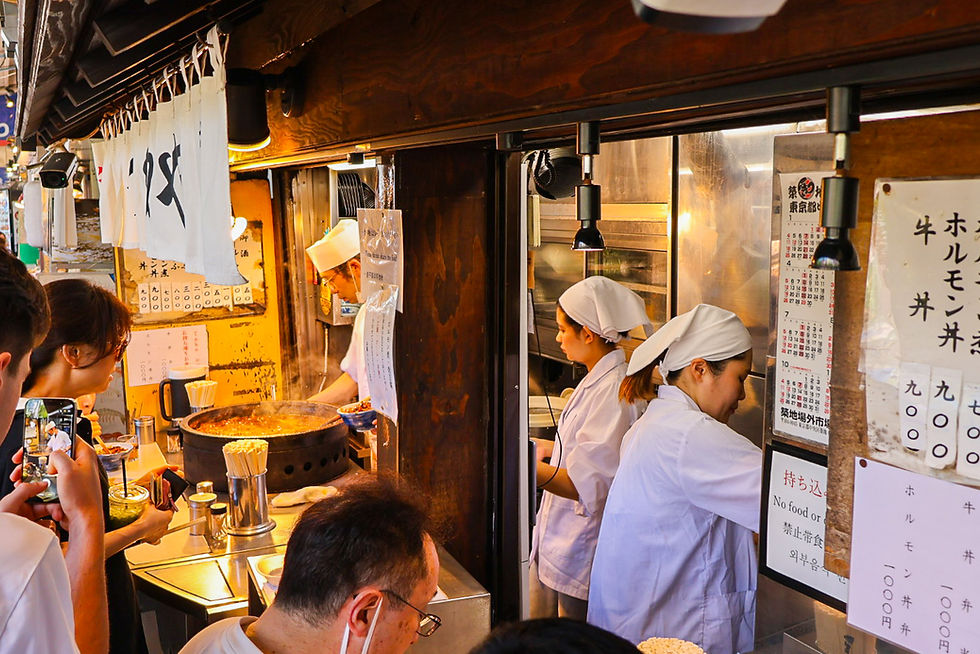
Located in the Tsukiji area, Kitsuneya is arguably the most famous of the three shops on this list.
Although many visitors know it for its horumon stew, its beef bowl is equally deserving of attention. The restaurant has been feeding customers for generations and remains one of the most iconic breakfast and lunch destinations in the area.

What sets Kitsuneya apart is its intensely flavored beef. Long simmering creates a rich, concentrated taste that pairs perfectly with rice. Every bowl feels substantial and deeply satisfying.

The setting adds to the experience. Eating at Kitsuneya connects diners to a piece of old Tokyo that has survived dramatic changes in the surrounding neighborhood. Even after the relocation of the famous wholesale fish market, the area’s food culture continues to thrive, and Kitsuneya remains one of its most recognizable institutions.
Expect lines, especially during busy periods. The wait is usually worth it.
Why Seek Out Independent Gyudon Shops?
There is nothing inherently wrong with chain gyudon. In fact, many Japanese people eat it regularly and appreciate its affordability and consistency.
However, chains now dominate the category so completely that many visitors never realize there is another side to gyudon culture.

Independent shops offer something different. Recipes often reflect decades of refinement rather than corporate standardization. Atmospheres feel more personal. Regular customers are often greeted by name. Small differences in broth, beef preparation, and seasoning become easier to appreciate.
Most importantly, these restaurants preserve a style of dining that is becoming increasingly rare in modern Tokyo.

For travelers interested in food beyond the obvious tourist checklist, Tatsuya, Nandokiya, and Kitsuneya provide three excellent opportunities to experience gyudon as a local specialty rather than simply a fast-food meal.
The next time you find yourself craving a beef bowl in Tokyo, consider skipping the familiar chains. These independent classics demonstrate why gyudon became a beloved part of Japanese food culture in the first place.
Gyudon chains are just one corner of Japan's massive fast-food scene. If this kind of everyday food culture interests you, follow Japan Food Travels for more of it — from all over Japan, not just Tokyo.


