
10 Dango Flavors Explained: A Guide to Japan’s Chewy Skewered Sweet

Dango is a traditional Japanese sweet made from rice flour dumplings, served on skewers. If you’ve seen it online, it’s probably because of how it looks: neatly arranged, often colorful, and easy to recognize at a glance.
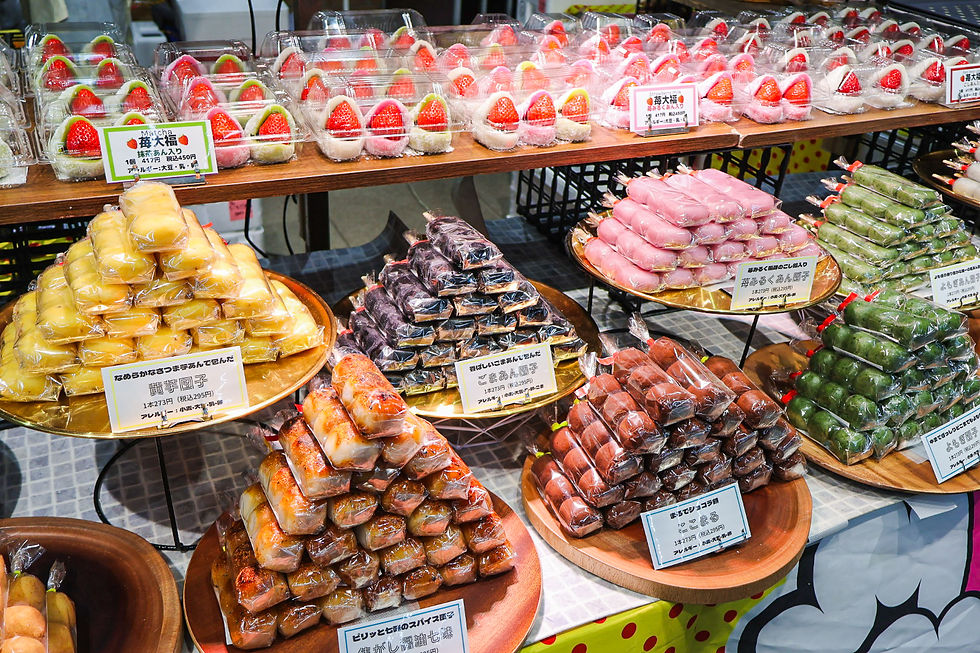
But there’s more to dango than the versions that show up on social media. While a few popular types get most of the attention, dango has a long history and a wide range of flavors that go far beyond those basics.
What is Dango?
At its base, dango is made from rice flour and water. The dough is shaped into small round dumplings, then boiled or steamed until soft and chewy.
That texture is what defines it. It’s smooth, slightly firm, and has a gentle bounce when you bite into it. It's light, but still satisfying.
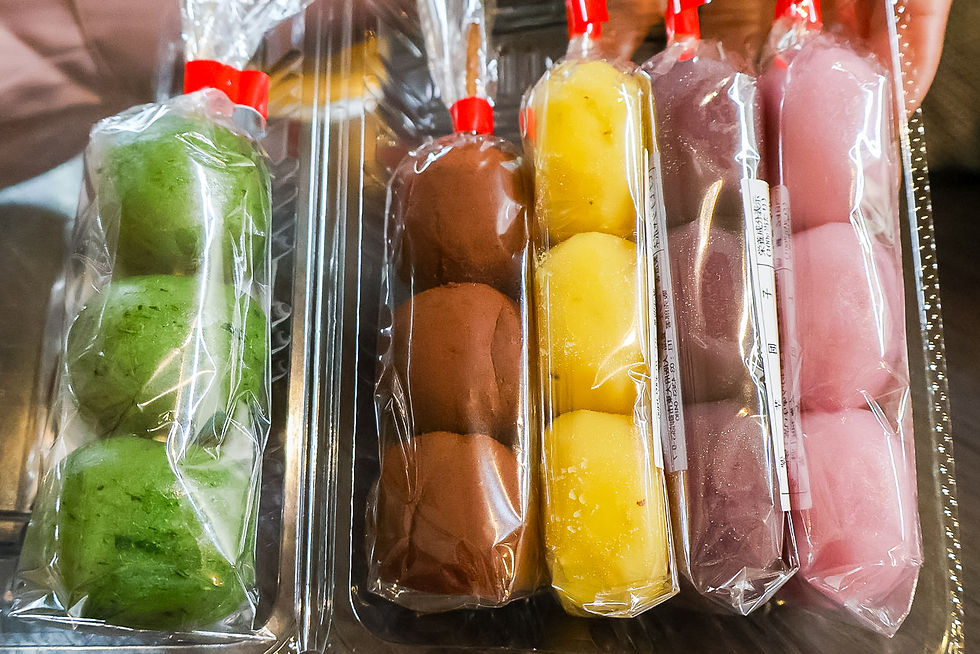
Dango is usually served on skewers, with three to five pieces per stick. This makes it easy to eat and gives it the clean, balanced look it’s known for.
On its own, dango has a mild flavor with a hint of sweetness. That simplicity is what makes it so versatile! Depending on how it’s finished, it can become sweet, savory, rich, or subtle.
The History of Dango:
Dango has been part of Japanese food culture for centuries, with origins in early grain-based foods.
Before rice flour became common, dumplings were made using ground grains like millet. These early versions were simple and practical, used as an easy way to prepare staple ingredients.

By the Heian period (794–1185), rice had become more central to Japanese cuisine. Around this time, early forms of rice dumplings appeared in a more recognizable way. They were often used in religious offerings, showing that even simple foods had symbolic meaning.
During the Muromachi period (1336–1573), tea culture began to develop. Sweets were served alongside matcha to balance its bitterness, and dango became one of those sweets. This helped shape how it was presented and enjoyed.
The Edo period (1603–1868) is when dango became widely popular. As cities like Edo (modern Tokyo) grew, street food culture expanded. Vendors sold dango near temples, markets, and travel routes. It was affordable, convenient, and filling.
Regional styles also developed during this time. Some focused on sweet coatings, while others used savory flavors like soy sauce. Grilling over charcoal became more common, adding a slightly crisp texture and deeper flavor.

Seasonal traditions became more established as well. Hanami dango, with its pink, white, and green colors, became associated with cherry blossom viewing in spring. In autumn, tsukimi dango became part of moon-viewing festivals, often arranged in a pyramid shape to represent the full moon.
By the late 19th century, dango was already a well-established food with both cultural and everyday importance. Today, it continues to be enjoyed in both traditional and modern forms.
The Range of Flavors:
One of the most interesting things about dango is how much it can change while keeping the same main ingredients.
The base ingredients don’t vary much, but the finishing methods do. Dango can be grilled, coated, wrapped, or mixed with other ingredients. Some versions are light and subtle, while others are rich, smoky, or bold.

Regional differences add even more variety, and modern flavors, like chocolate or strawberry, have expanded what dango can be even further.
Because of this, this treat doesn’t feel limited. It can be traditional or modern, simple or more layered, depending on how it’s made.
Dango Flavors and What They’re Like:
Trying different types of dango shows how much variety comes from such a simple base. Each version changes the flavor, texture, and overall experience in its own way.
Here are 10 flavors I've tried:
1. Tri-colored Dango
One of the most recognizable types, with pink, white, and green dumplings tied to spring.

The flavor is light and gently sweet, with little difference between the colors. It stands out for its balance and simplicity, making it an easy starting point.
2. Mitarashi Dango
A more flavorful and well-known variation.

The dumplings are grilled and coated in a thick soy-based glaze that mixes sweetness and saltiness. The slight char adds depth, and the sauce gives it a rich, glossy finish.
3. Strawberry Milk Dango
A dessert-style version with a modern feel.

The creamy strawberry coating adds a smooth, sweet, slightly fruity flavor that contrasts with the chewy texture.
4. Cocoa Dango
Adds a mild chocolate flavor.
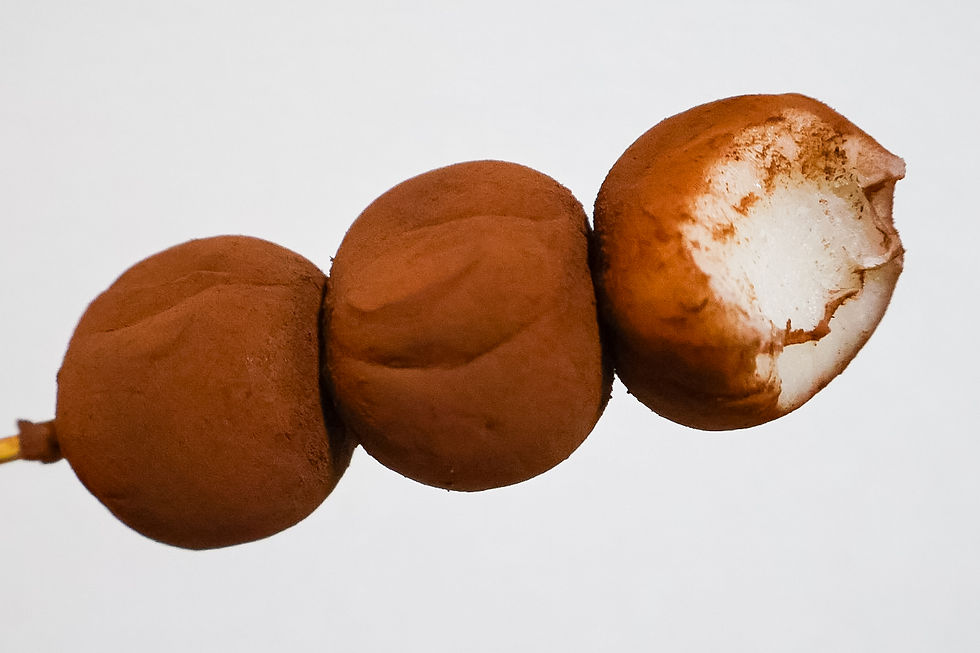
The cocoa brings a soft richness without overpowering the dumpling.
5. Soy Sauce with Spices (Spicy Dango)
A bold, savory variation with noticeable heat.

The dumplings are grilled and coated in soy sauce and spices that add real spiciness. The outside has a light crispness, while the inside stays soft and chewy.
6. Soy Sauce with Seaweed
Simple but full of flavor.

Wrapped in seaweed and brushed with soy sauce, it has a strong umami taste and a slight texture contrast.
7. Kinako Dango
A more traditional, mellow option.

The roasted soybean flour adds a nutty, lightly sweet flavor. The powder coating pairs well with the chewy center.
8. Sweet Potato Dango
Adds natural sweetness and richness.

The texture is slightly thicker and smoother, making it feel a bit more filling without needing extra sauces.
9. Matcha Paste Dango
Balances sweetness with a light bitterness.

The earthy matcha flavor adds depth without being too strong, giving it a more layered taste.
10. Edamame Paste Dango
A lighter, less common variation.

The edamame adds a chunky, slightly creamy texture with a mild flavor that sits between sweet and savory.
Why Dango Continues to Be Popular:
Dango remains popular because it’s simple and adaptable.
The base recipe stays the same, but the variations continue to grow. Traditional styles exist alongside modern ones, and both are widely enjoyed.
It also fits into many settings, such as street food, tea pairings, and seasonal traditions. Social media has made it more visible, but the variety behind it is what keeps people interested.
Final Thoughts on Dango:
Dango may look simple, but it offers more variety than it first appears.
The versions most often seen online are just a small part of what exists. Once you try different types, the range becomes clear, from light and sweet to rich and savory.
That variety is what makes dango worth exploring. Even with the same base, each flavor offers a slightly different experience, and there’s always more to discover. On your next trip to Japan make sure to try this delicious treat!


