
Tokyo Ramen Guide: The Main Styles and How to Find the Best Bowl

Tokyo is where ramen begins. What started in Tokyo evolved into the most diverse, most competitive, and most inventive ramen scene on the planet.

Every regional style that emerged elsewhere in Japan — the rich tonkotsu of Fukuoka, the hearty miso of Sapporo, the delicate shio of Hakodate — eventually finds its way to Tokyo, where it gets refined, reimagined, and competed over by chefs who have dedicated their lives to a single bowl.

Tokyo doesn’t just have good ramen. It has every ramen, and it’s still the place where new styles are born. Here’s how to navigate it — a proper Tokyo Ramen Guide.
Shoyu: The Style That’s Everywhere
Shoyu — soy sauce-based ramen — is the most common ramen style across Japan. This isn’t a Tokyo exclusive, it’s the national baseline. But what Tokyo does with shoyu is its own thing. Depending on the type of soy sauce used, whether darker and robust or lighter and more delicate, the resulting bowl can vary enormously.
Generally speaking, Tokyo’s shoyu tradition leans toward the lighter, more refined end. Kyoto, by contrast, tends toward a richer, darker shoyu. But the style’s range is wide, and Tokyo has practitioners at every point on that spectrum.

A reference point worth seeking out is Yamaguchi, whose broth is made from little more than chicken and water — a masterclass in restraint that shows just how far a great shoyu can go when the focus is precision over richness.
Shio: Light, Clear, and Quietly Brilliant
Think of shio as shoyu’s cousin. Both are common nationwide, both can be complex depending on the kitchen. But where shoyu brings the tang, sweetness, and depth of soy sauce, shio is seasoned with salt alone (from rock salt to sea salt), making it lighter and brighter. It’s the style that perhaps most rewards a great base broth, since there’s nowhere to hide.

There’s nowhere in Japan more synonymous with shio ramen than Hakodate, the port city in southern Hokkaido, and Tokyo has shops doing full justice to that tradition. Goryokaku is one of them — serving Hakodate-style shio that captures the delicate, almost luminous quality the style is known for. If you’ve never had shio ramen before, this is a strong place to start.
Miso: More Than Just Sapporo
Mention miso ramen anywhere in Japan and Sapporo comes up immediately — and fairly so. The city in Hokkaido essentially put miso ramen on the map, and its style, rich and hearty with a depth that holds up against the cold, remains the benchmark. Tokyo has plenty of Sapporo-style shops, and they’re worth visiting.

But Tokyo also has its own miso ramen identity. One homegrown style traces its roots back to a shop called Hanamichi. A contemporary example of this lineage is Hook — a shop that branches directly off Hanamichi's intensely rich and smoky soup. For those who want the Sapporo reference point, Santora does that style well. Both are worth trying, and the contrast tells you a lot about how far miso ramen’s range actually stretches.
Tsukemen: A Tokyo Story
Tsukemen — dipping ramen, where the noodles and broth arrive separately and you dip as you go — has deep Tokyo roots. While the style’s origins can be traced to earlier ramen shops like Marucho, it was Taishoken that carried the baton and is most credited with popularizing it, sparking an entire category that has since spread across the country.

The style evolved significantly over the years toward richer, heavier broths brimming with chicken, pork and fish flavors. Recently though, there’s been a meaningful counter-movement: lighter, more refined tsukemen built on kelp water and dashi bases. Both directions have passionate advocates in Tokyo, and both are worth exploring. For a contemporary take on the heavier style done with real skill, Michi is a strong recommendation.
Mazesoba / Abura Soba: No Broth, No Problem
Mazesoba and abura soba are essentially the same thing by different names: a soupless ramen style born in West Tokyo, built around thick noodles and a concentrated sauce rather than broth. Much like tsukemen, the focus is on the noodles themselves — enjoying their texture and firmness without the softening effect of a hot soup. Pork fat and soy sauce form the base of the sauce, with condiments like chili oil and vinegar on the side to adjust as you go.

Bubuka is a solid Tokyo representative of the style and a good entry point if you've never had abura soba before. Worth distinguishing from Taiwan mazesoba, which despite the name was actually born in Nagoya — a spicier, fishier variation that typically includes a raw egg and has its own devoted following.
Tonkotsu: Not From Tokyo, But Very Much Here
Tonkotsu — the rich, creamy pork bone broth most associated with Fukuoka and the Hakata region of Kyushu — is not a Tokyo style. But Tokyo has embraced it fully, and Hakata-style shops are easy to find across the city. Beyond strict tonkotsu, many Tokyo shops produce their own rich pork-based broths that blur the lines between styles entirely.

Mendokoro Issho, for instance, stands out. But tonkotsu is also more than just Hakata and Fukuoka. Tonkotsu shoyu, for instance, marries a salty soy sauce base with the rich depth of pork bones. A strong local example is Yokohama-style ie-kei ramen, which does exactly this and has developed a devoted following across Tokyo despite originating just south of the city.
Tokyo Ramen Guide — A Few Things Worth Knowing
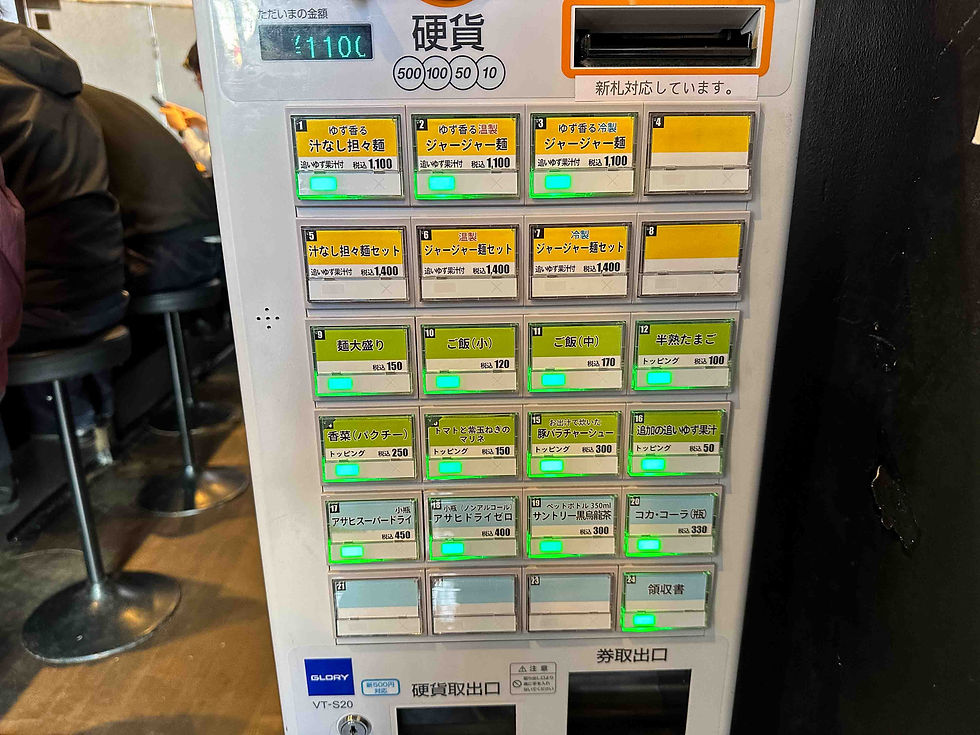
Ramen shops in Tokyo often run on a ticket machine system — you pay at the machine before you sit down, hand the ticket to the staff, and wait. It looks intimidating the first time, but some machines have picture buttons or English options, and pointing works fine when it doesn’t. Lines outside a shop are almost always a reliable quality signal. Solo dining at a counter seat is completely normal and in many ways the ideal ramen experience.
Tokyo’s ramen scene rewards curiosity more than almost any other food culture in the city. Every style has its master practitioners, every neighborhood has its hidden gems, and the gap between a good bowl and a great one is often just a matter of knowing which door to walk through. If you want someone in your corner for that — a guide who knows the difference between a Hakodate-style shio and a Tokyo shoyu and exactly where to find the best of both — our friends at Tokyo Ramen Tours run dedicated ramen experiences across the city. And for a deeper dive into ramen culture, history, and the obsession behind it all, 5amramen.com is where that conversation lives.
FAQ
What is the most popular ramen style in Tokyo?
Shoyu reigns supreme. It’s the most common ramen style across Japan as a whole, and Tokyo has a particularly deep tradition with it — producing some of the country’s most refined and carefully crafted shoyu bowls. That said, every style is well represented in Tokyo, and the city’s strength is precisely that there’s no wrong answer.
What is the difference between shoyu and shio ramen?
Both can be light and delicate, but shoyu is seasoned with soy sauce, which brings its own complexity — tang and subtle sweetness, for example. Shio is seasoned with salt alone, making it cleaner and brighter on the palate, with nothing to mask the quality of the base broth. The type of salt used — sea salt, rock salt, or otherwise — has a meaningful impact on the final bowl.
Where was tsukemen invented?
The roots of tsukemen trace back to early Tokyo ramen shops including Marucho, but it was Taishoken that popularized the style and brought it to widespread attention. From there it spread across Japan and has continued to evolve — from the rich, heavy broths that defined it for years to a newer wave of lighter interpretations.
What is abura soba?
Abura soba — also called mazesoba — is a soupless ramen style born in West Tokyo. Instead of broth, the noodles are served with a concentrated sauce. It’s intensely flavored, deeply satisfying, and one of Tokyo’s great contributions to the ramen canon.
Is Tokyo good for ramen?
Tokyo is the greatest ramen city in Japan — and by extension the world. It’s where ramen culture began, it’s where every regional style eventually arrives and gets reimagined, and it’s still the place where new styles emerge. No other city comes close to the range, the quality, or the sheer density of great ramen shops. If ramen matters to you, Tokyo is where you want to be.


